
Sacred History
Rewari — Sasural of Lord Balaram
How a king, his daughter, and a divine marriage gave this city its name.
A King, His Daughter, and a City Named in Her Honor
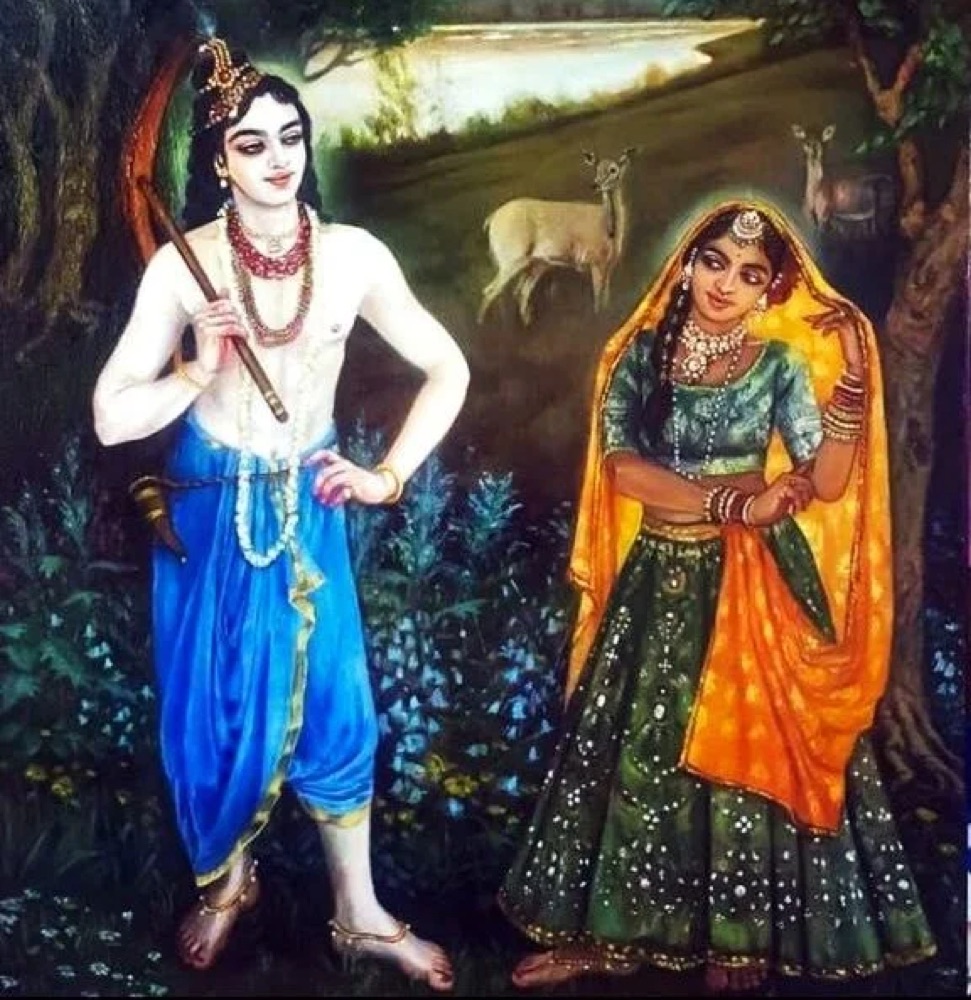
According to local tradition, this region was once ruled by King Rewat (Raivata), a wise and devoted king. His daughter, the princess Revati, was renowned for her grace and devotion. When the time came for her marriage, it was Lord Balaram — the plough-bearing, ever-strong elder brother of Krishna — who was chosen as her husband.
"A daughter's wedding is remembered for generations — but when the groom is the Lord Himself, even the land remembers."
As was the custom, King Rewat is said to have gifted his daughter a substantial dowry — including land in this very region. Devotees believe this is how the land came to be intimately, permanently associated with the Lord's family: not merely visited by Balaram, but given to His bride as her father's blessing.
From "Rewa-Wadi" to "Rewari"
Over centuries, oral tradition and local record both point to the same etymology: the land gifted in Revati's dowry came to be called "Rewa-Wadi" — Revati's land or garden. Through generations of pronunciation and dialect shift, "Rewa-Wadi" softened into the name known today: Rewari.
Why This Matters for Devotees Today
For a devotee, this is more than folklore — it is a reason to see Rewari not as an ordinary town, but as the sasural (in-laws' home) of Lord Balaram Himself. It is why ISKCON Rewari's mission feels, to many local devotees, less like planting something new and more like returning something ancient — building a home for the Lord in a land that already belonged, in spirit, to His family.
This account reflects local tradition, as also referenced on the official website of the District Rewari, Government of Haryana, and is cherished by devotees as part of the region's spiritual heritage. It is presented here as tradition and devotional history — distinct from, and not dependent on, formal archaeological verification.